
There’s something almost absurd about the fact that the most respected name in fine dining, the Michelin Guide, belongs to a tire company. Yet here we are: chefs around the world, from Paris to Tokyo to Budapest, building careers around the approval of anonymous inspectors working for the same brand that sells your car tires. How on earth did that happen?
It starts, as so many great stories do, with a problem that needed solving.
Two Brothers, a Fledgling Industry, and a Very Smart Marketing Move
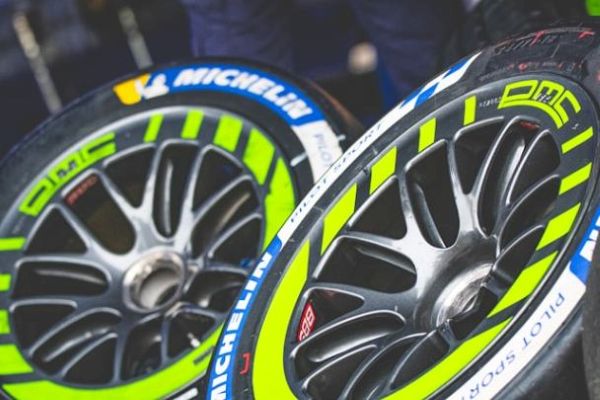
In 1889, French brothers André and Édouard Michelin launched Michelin Tire. At the time, fewer than 3,000 cars existed in all of France. That’s not a typo. The brothers were betting on an industry that had barely left the starting line, and they needed to find ways to put more drivers on the road — ideally, drivers who were racking up serious mileage and wearing through tires at a satisfying rate.
Their solution? Give people a reason to drive further.
The first Michelin Guide appeared in 1900, and it was genuinely useful in ways that travel guides of the time weren’t. While most guides stuck to major roads, Michelin packed theirs with maps, tire-changing instructions, mechanic locations, and fuel stops. They wanted drivers to feel confident venturing beyond familiar territory. And once they were out there exploring? Well, they’d need to eat and sleep somewhere — so the guide added restaurants and hotels along France’s most popular routes.
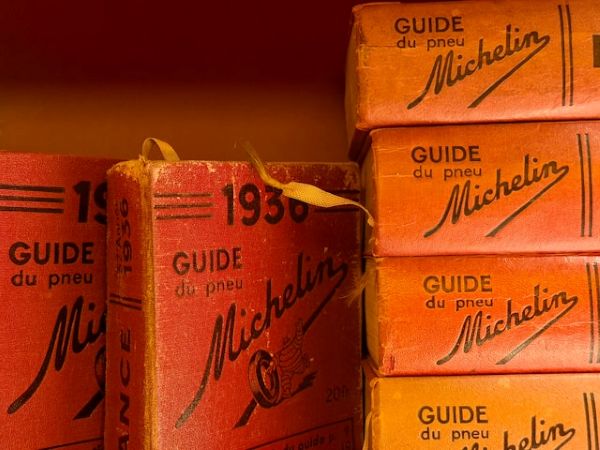
It was, at its core, a marketing pamphlet. But it was a brilliant one.
Growing Pains and a Lesson in Perceived Value
By the time World War I interrupted production, the Michelin guide had already spread its reach across Europe. When it was relaunched in 1920, André Michelin made two significant decisions: he removed all the advertising, and he started charging for it — seven francs a copy. The reason, apparently, was seeing a copy of his free guide being used to prop up a workbench at a tire shop. “Man only truly respects what he pays for,” he reportedly said. Hard to argue with the results.
That same edition introduced anonymous mystery diners tasked with reviewing restaurants — a practice that continues today and remains one of the most distinctive features of the Michelin system. The guide was interrupted again during World War II, though Allied Forces found its maps so useful that production resumed in 1939 specifically for military purposes. It’s not the most glamorous chapter in the guide’s history, but it speaks to just how thorough and trustworthy its geographic detail had become.
The Man Behind the Brand
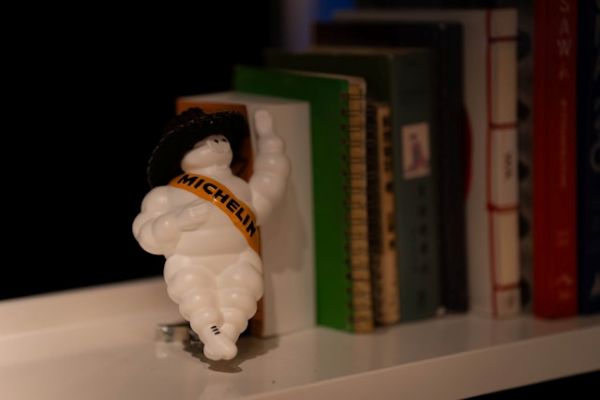
You can’t talk about Michelin without mentioning Bibendum — better known as the Michelin Man. Introduced in 1898, his rotund, stacked-ring silhouette was inspired by a pile of tires. Rubber at the time was naturally white, which explains why he doesn’t look like your typical modern tire. His name comes from the Latin phrase *Nunc est bibendum*, meaning “now is the time to drink,” a nod to the idea that Michelin tires would “drink up” any obstacle on the road. It’s a curious coincidence — or perhaps not one at all — that this drinking metaphor became the mascot for the guide now synonymous with exceptional food and wine.
What the Stars Actually Mean
The Michelin guide began awarding stars in 1926, starting with a single designation for a standout dining experience. By 1931, the three-tier system we know today was firmly established:
– One star: High-quality cooking, worth a stop.
– Two stars: Excellent cooking, worth a detour.
– Three stars: Exceptional cuisine, worth a special journey.
These aren’t just catchy marketing lines. They reflect a genuine philosophy: that great food is worth traveling for. Restaurants are visited multiple times throughout the year by anonymous inspectors — at lunch and dinner, on weekdays and weekends, across different seasons. No prior notice, no special treatment. The integrity of that process is exactly what makes the rating mean something.
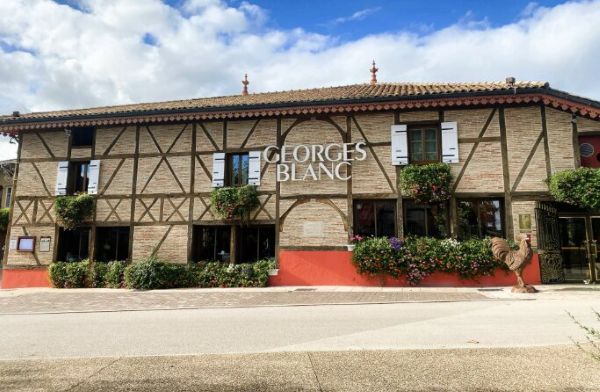
Georges Blanc restaurant in Vonnas, eastern France, has continuously held at least one Michelin star for almost as long as the award has existed
Eating Well Without the Eye-Watering Bill
For travelers who want serious quality without a serious dent in their wallet, the Michelin guide offers the Bib Gourmand designation — named after Bibendum himself. It recognizes restaurants delivering excellent food at accessible prices, currently benchmarked at around $40 for a three-course meal. If you’re planning a trip and want to eat well without splurging every night, the Bib Gourmand list is genuinely one of the best resources available.
From Tires to Tables
What began as a clever scheme to sell more rubber has quietly transformed into the global benchmark for culinary excellence. Chefs who earn a Michelin star often describe it as the most meaningful recognition of their career. Those who lose one have been known to describe it as devastating. That’s the power of a rating system built on consistency, anonymity, and over a century of credibility.
